
WinCrown · Welcome bonus200 free spins on selected slots
Reviews (9,827)
4.9Rating
THE ALDGATE NOTEBOOK
 Best casinos available in AustraliaUpdated 8 November 2026
WinCrown · Welcome bonus200 free spins on selected slots
Reviews (9,827)
4.9Rating
Playing an online casino for real money means your own Australian dollars are converted into a balance held by the operator, and every spin or hand is a bet against a built-in edge. In Australia the catch is legal: online casino games and online pokies cannot lawfully be offered to you under the Interactive Gambling Act 2001, so the sites that accept you are operating outside local rules, and the protections you would expect from a licensed Australian business are not there.
Demo mode and real-money mode run on the same games, but they behave differently for the person playing. In demo you cannot lose anything and you cannot win anything, so decisions cost nothing. Switch to real money and three new things appear: a ledger that tracks every dollar, terms that govern when you can take money out, and a feel for risk that you cannot get from play credits.
That ledger is the part most people skip over. Your balance is not cash in your pocket. It is a record of what the operator says it owes you, and its value depends on the operator's willingness and ability to pay. For a site that is licensed and supervised by a body you can contact, that is a legal claim. For a site that is not, it is closer to a favour.
For a comparison with something you can see in person, read our notes on the Aldgate Pump gaming lounge: a venue floor has a licence number, a regulator and a counter, which is precisely what a website does not give you automatically.
Three layers are involved. Federal law (the Interactive Gambling Act 2001) prohibits providing online casino-style games, including online pokies, to customers in Australia. The Australian Communications and Media Authority (ACMA) enforces that against providers and can have sites blocked. State and territory law governs the venues, wagering and lotteries that are licensed locally; in South Australia, for example, gaming machines sit in licensed venues under state rules. Consumer protection applies to licensed businesses operating in Australia, and it is the layer that goes missing when a site is based overseas.
The Act is aimed at the people running the sites, not at the people playing on them. That is a reason not to panic. It is not a reason to assume you are covered. If a dispute arises there is no Australian licence to appeal to, the operator may be in a jurisdiction with weak oversight, and a bank is not obliged to reverse a payment you made willingly.

When you deposit, the money leaves your bank account and is credited as a balance on the operator's system. In a well-regulated market, rules usually require operators to keep player funds separate from the company's own money, so the balance survives if the operator fails. Whether a given offshore site does this is something you can only check from its own published statements, and statements are not audits.
So the useful question is not "is the site fun" but "what happens to my balance if the site disappears tomorrow". If the honest answer is "nothing protects it", the sensible response is to keep balances small and to withdraw wins rather than leave them sitting there as a bank.
Every casino game has a built-in house edge: over a very large number of bets, the operator keeps a share. For pokies and slots that share is expressed as a return to player (RTP) figure, and the edge is whatever remains after RTP. Here is a worked example using a made-up number, so you can see how the maths feels. It is an illustration, not a statement about any particular game.
Two lessons follow. First, the "cost of entertainment" is the average loss across many bets, and you only get to see one session at a time. Second, the average is only valid if the game is fair and the RTP is what it says. On an unregulated site, nobody independent is checking that. Hence the point of licences: they demand testing by an independent lab.
Searches for a new online casino with real money are popular because new sites advertise generous welcome offers. The size of a launch offer tells you about the site's customer-acquisition budget, not about its reliability. A brand that is three months old has no payout history, no complaint trail and, often, no track record in the licensing jurisdiction either.
That does not make every new site a scam, but it moves the burden of proof. If you are tempted, wait a few months, look for independent discussion from people who have actually withdrawn, and test with a very small deposit and a very small withdrawal first. The smaller the amount you put at stake in the first week, the less the opening bonus matters.
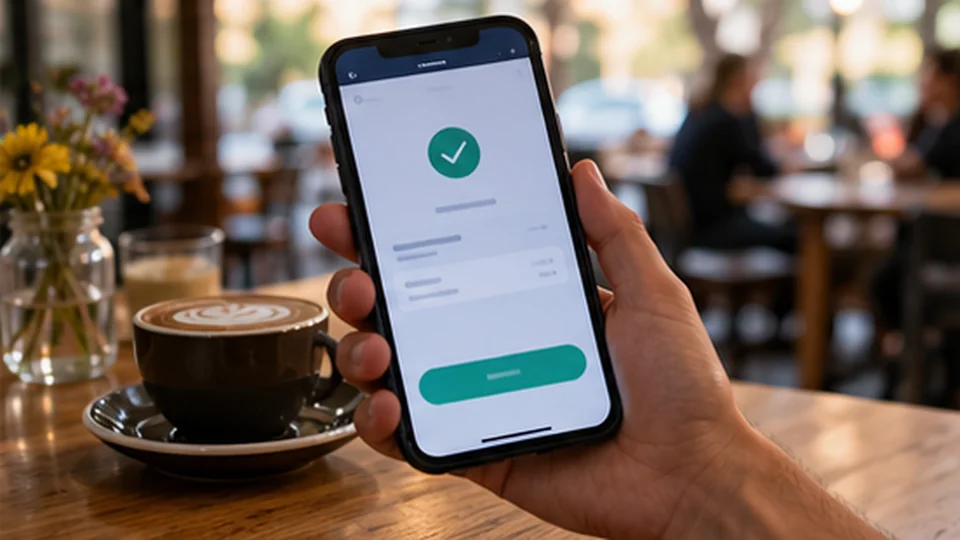
How you pay in decides how easily you can prove what happened later. Credit cards are banned for licensed online wagering in Australia since 11 June 2024, so offshore casinos often route deposits through other methods. Bank transfers and PayID leave a clear record in your own banking history. Prepaid vouchers and cryptocurrency leave a record too, but one that is harder to dispute, because a crypto payment cannot be reversed and a voucher has no link to a bank.
Whichever route you choose, keep your own simple ledger: date, amount, method and what you got back. People who write it down tend to spot losses sooner. Banks also see patterns, and a run of frequent transfers to payment processors you do not recognise can lead to questions or holds.
A bonus changes the terms of your balance. Most come with a wagering requirement, which means you must bet a multiple of the bonus (sometimes of bonus plus deposit) before anything becomes withdrawable. Maximum bet limits, game restrictions and expiry dates can cancel the bonus and its wins if you break them.
A simple test: before accepting, can you say in one sentence what you must do to take your own money out? If the answer includes a number of times you must play through a figure, the offer is a contract, not a gift. Reading it takes five minutes; learning it afterwards can cost the whole balance.
None of these checks make an unlicensed site equivalent to a regulated Australian business. They are about avoiding avoidable losses.

For readers who arrived with a local interest, here is the contrast. A licensed South Australian hotel runs its gaming room under a state licence that you can look up, and our page on the Aldgate Pump Hotel licence explains what that number is and what it covers. The room has staff, an entry process and a counter. You can leave with whatever you have in your pocket, and nobody else holds your balance.
That is not an endorsement of playing; it is a description of what accountability looks like. If you are mostly here for the food and the atmosphere, the food, bar and gaming overview is a better starting point.
Seeing these beliefs written out is a useful exercise. If you recognise one in your own thinking, it is a good moment to adjust your plan rather than your luck.
Here is a second illustration, again with invented numbers, because the way small sessions accumulate is easy to miss. Imagine someone who deposits A$50 on each of four evenings in a week, plays until the balance is gone or the evening is over, and withdraws nothing.
Total deposited: A$200. Money back in the bank: A$0. The Wednesday win felt real and the balance that remained felt like a cushion, but because it stayed on the site and was fed back in, it was all spent. Nothing in this example is unusual, and nothing in it depends on bad luck. It is simply what happens when winnings are treated as play money and not withdrawn.
The countermeasure is dull and effective: decide in advance the point at which you withdraw (for example, when the balance doubles) and the point at which you stop (when the deposit is gone), and do it every time.
Support quality is invisible until something goes wrong, which is the worst time to find out it is poor. A cheap test is to ask a real question before depositing, one that cannot be answered by a canned reply: "If I withdraw by bank transfer and my name differs slightly from the account, what happens?" Look at how long it takes, whether the answer addresses the question and whether it matches the written terms.
Save every written reply. If the operator later contradicts its own support staff, a record is your only evidence. Complaints procedures matter too: a licensed operator typically has to offer a way to escalate to an external body. If a site can only say "contact our team" with no further step, you have learned how far your complaint will go.
The table does not say one is good and the other bad. It shows that accountability and friction are built into one and have to be supplied by you in the other. If you play online at all, rebuild the friction yourself: set limits, use scheduled breaks and keep your bank card out of the room at night.
A budget has only one job: to decide in advance how much you accept losing, so you do not decide it mid-session. Work from your fun money, not from rent or savings. Treat any win as a pleasant surprise, never as income. Set a deposit cap per week and a time cap per session, step away when either is reached, and do not make a second deposit to recover a loss.
Gambling is for people aged 18 and over. If it stops being fun, or you are worried about your own play or someone else's, Gambling Help Online offers free, confidential support, 24 hours a day. Local contacts are listed on our support page.
The Interactive Gambling Act 2001 prohibits providers from offering online casino games and online pokies to people in Australia. The law targets the provider, not the player, but sites that accept you do so outside Australian licensing and consumer protection.
A licensed operator answers to a regulator you can contact, has its games tested by independent labs and is required to follow player-protection rules. For online casinos aimed at Australians there is no Australian licence, so check any licence a site claims on the register of the body that supposedly issued it.
A small deposit limits your loss, which is a sensible way to handle any untested site. It does not change the odds of a game or the risk that withdrawals are delayed or refused.
Riskier by default, because they have no payout history. A big launch bonus says nothing about reliability. Test with a small deposit and a small withdrawal before trusting a new site with more.
You cannot confirm fairness from the site's own claims. Look for a named independent testing laboratory and verify the certificate with that laboratory, and treat missing or vague statements as a warning.
Source: Aldgate Pump Hotel